
Colquitt Arrest Log Is Request-Based
The Colquitt County Sheriff's Office publishes no 72-hour, seven-day, weekly, or rolling arrest log. Its website offers nothing of the kind. There is no archive and no update stamp. There is no weekend carryover rule or stated photo policy. A third-party 30-day list is not a county blotter, no matter how it is labeled.
So the path is a request. Ask the Sheriff's records custodian for jail commitment or booking records tied to exact dates. Say whether you want named entries, individual records, aggregate arrest-and-booking statistics, or all three. Those are separate series. Call the jail at 229-616-7430 or the business office at 229-616-7020.
The captured Sheriff page supplies contacts and jail services, but not a public blotter.
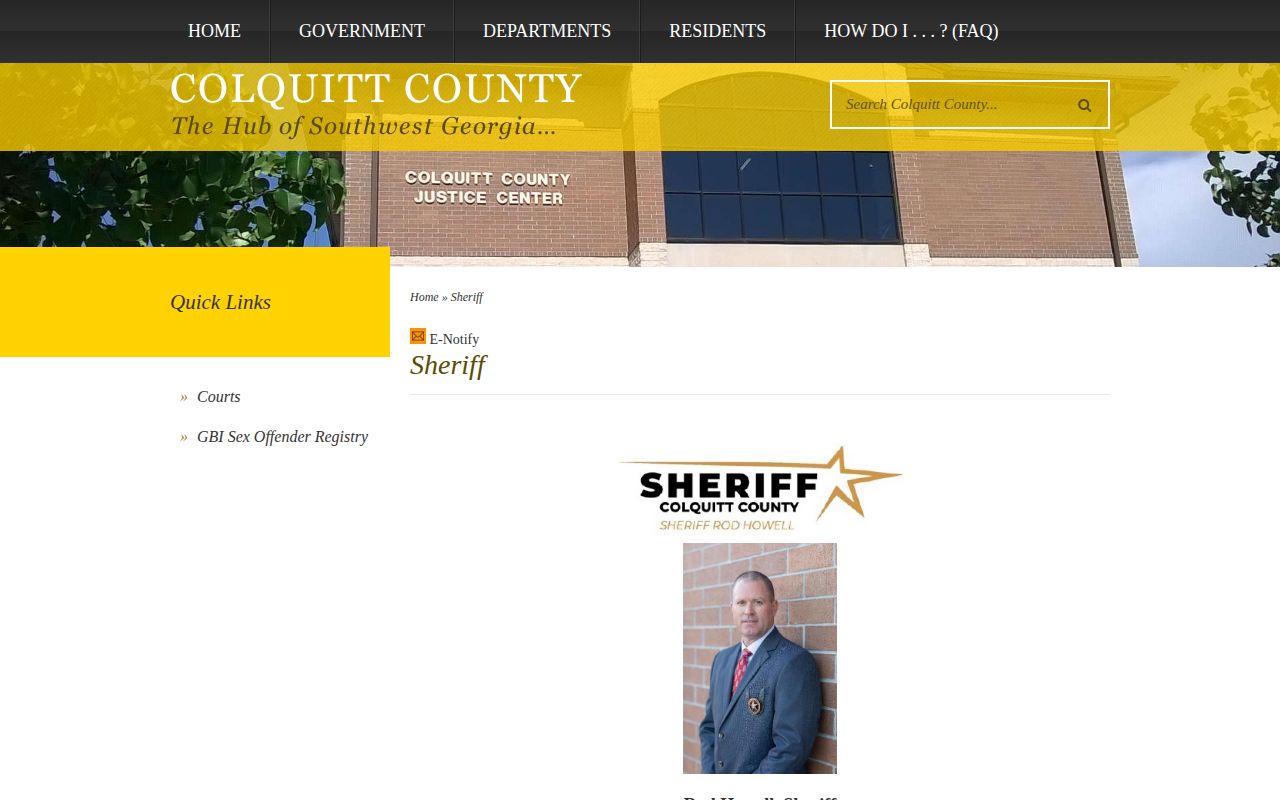
That negative finding is why a defined date-range request leads the official workflow.
Read Colquitt Arrest Records by Date
Dates make the request. "All recent arrests" defines no window and names no document, so it invites confusion. A bounded span gives the custodian clear scope and makes later comparisons hold up.
- Choose the period. Give inclusive dates and say whether they refer to arrest, commitment, or release.
- Name the series. Ask for jail booking records or the jail register. Request statistics separately.
- Add known details. Include a name, booking identifier, or arresting agency when relevant.
- Ask about cost and format. Request an estimate and electronic delivery. No fixed Sheriff photo fee was found.
- Reconcile the result. Compare custody fields with the court docket and preserve the response date.
Georgia Attorney General's guidance says to write the request and send it straight to the custodian. If production slips past three business days, the state expects a timetable, an estimate, and the legal basis for any delay or withholding. For a right-now custody question, try 24 Hour Arrests instead.
Colquitt Arrest-Log Entry Fields
Colquitt County posts no online entry format of its own. The fields below come from Georgia's jail-record statute plus useful request qualifiers. They are not a promise of one public form.
| Record field | Meaning |
|---|---|
| Name, age, sex, race | Identifiers in the statutory commitment record. |
| Commitment date | When jail commitment occurred, which may differ from incident time. |
| Process or court | The authority under which custody was accepted. |
| Crime charged | The booked charge; it may later change. |
| Arresting agency | A useful qualifier across city and county agencies. |
| Discharge date and order | A custody transition, not a court disposition. |
| Booking photograph | A separate issue governed by Georgia publication law. |
O.C.G.A. §42-4-7 sets out the commitment-record fields. Keep the agency's wording, but describe it as "charged" or "accused" where it fits.
Colquitt Weekend Arrest Records
Span your request across Friday evening, the weekend, and any holiday. That way you never guess which calendar day an intake belongs to. But Colquitt posts no Monday batch and shows no predictable weekend surge online. Counts come only from produced records.
Be clear about what you are counting. Arrest date, commitment date, and discharge date can all differ for one person. City arrests complicate things further. Moultrie, Norman Park, and Doerun run their own police contacts. Not every encounter ends in a county booking. Citation, transfer, medical, juvenile, and other-agency processes may follow separate routes. The recent-arrest hub helps you move between official sources.
Note: A complete weekend request should cover the full date span without assuming when intake data was entered.
Colquitt Arrest News and Blotters
Local news can fill timeline gaps the Sheriff's records do not. WALB's county index covers significant incidents, warnings, investigations, and court developments. The Georgia Gazette runs booking-oriented entries and sometimes officer narratives. It calls itself independent. For older reporting and court follow-up, the Moultrie Observer archive is the place to dig.
Each outlet has its own editorial purpose. WALB picks its stories. The Gazette is unofficial, and it disclaims completeness and timeliness. The Observer is a newspaper archive, not a jail database. Keep both the story date and the booking date. Then confirm facts with the originating office. The WALB county news index displays the current local coverage.
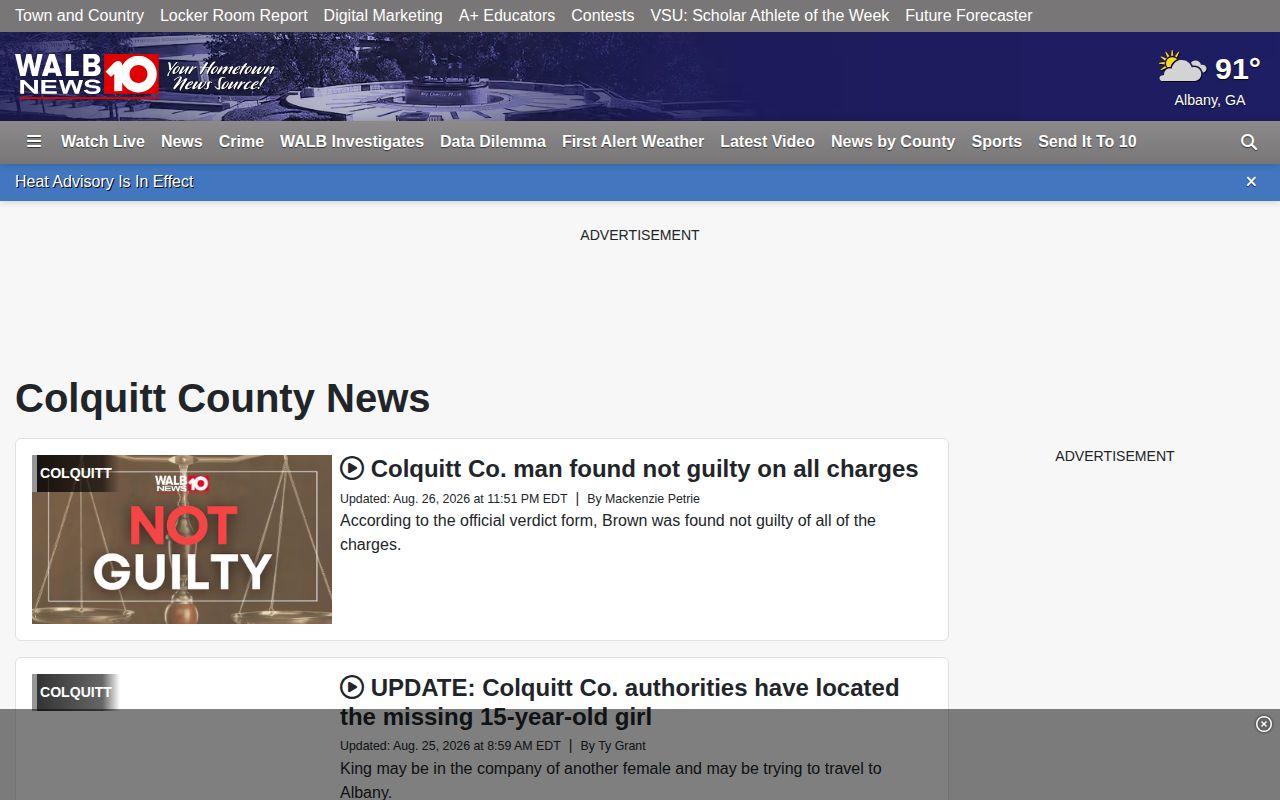
Its selected story coverage is secondary reporting, never a complete arrest log.
Colquitt Arrests Move Into Court
Booking and release are not court outcomes. The jail speaks to custody: commitment, the entered charge, and perhaps discharge. Magistrate Court handles bail, pre-warrant hearings, arrest warrants, and search warrants within its authority. The Clerk keeps Superior, State, and Juvenile court records.
So the handoff is simple. Jail first for custody. Magistrate next for early bail or warrant questions. Clerk last for docket and disposition. The official courts hub lists all these offices with contacts. Georgia Courts e-Access may redirect you to a provider and require an account before you can search.
Those contacts are how you follow a Colquitt County booking into the judicial record. Court files show what happened later. The arrest log does not.
Colquitt Booking Archives and Retention
An expired convenience page never means the record vanished. Colquitt has no web blotter anyway. Older arrest searches go straight to the right record series. The Georgia Archives schedule keeps jail booking records for 10 years after release, jail registers for 10 years after the last entry, incarceration lists for one year, and summary statistics for five.
Retention rules are not access guarantees. Exemptions, holds, archival transfer, audits, redaction, and system migrations can all affect what gets produced. Ask for a "jail booking record," "jail register," "incarceration list," or "arrest and booking summary" by name rather than hunting for an old webpage. The retention schedule spells out each distinct series.
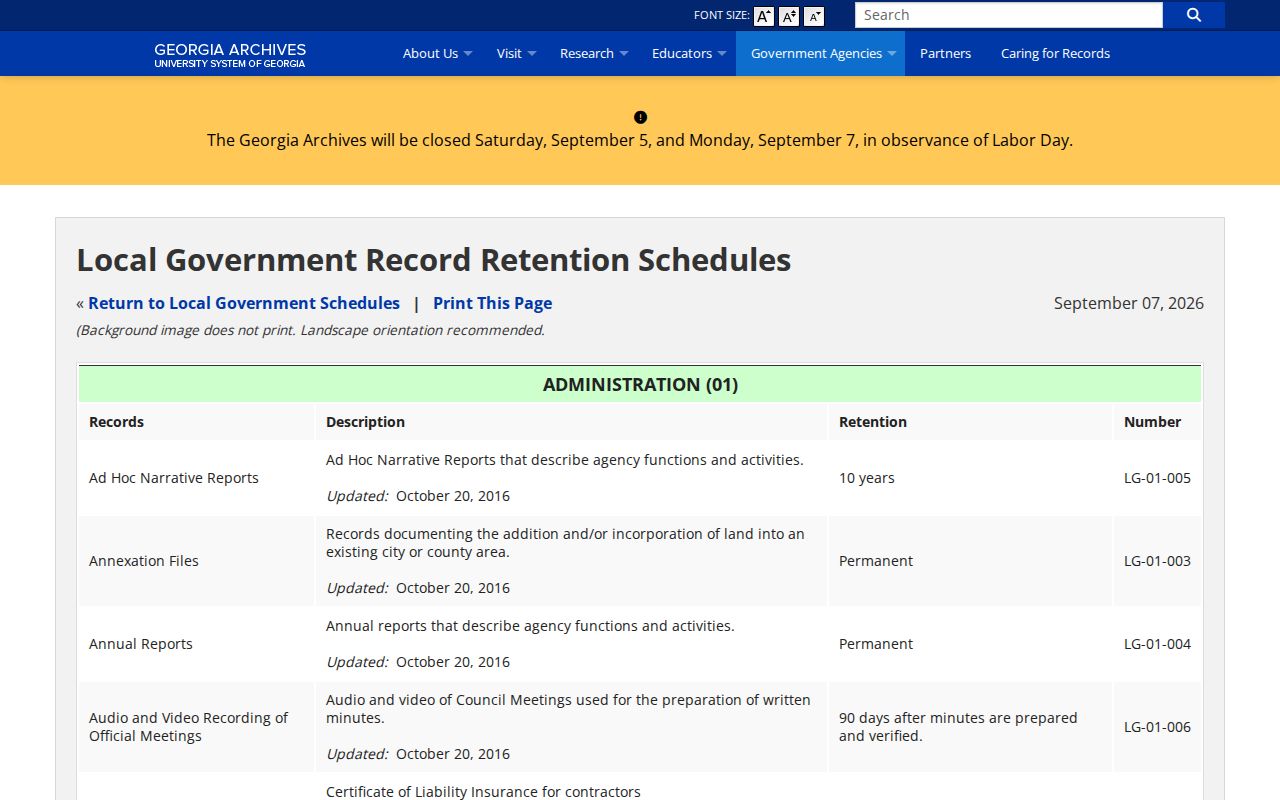
The schedule frames the request; the Sheriff must confirm actual availability.
Arrest Logs Do Not Prove Guilt
Pull a multi-day arrest log. You will meet several dates that look alike but mean different things. The incident date covers the event itself. The arrest date belongs to the officer's action. A commitment date marks jail entry. Discharge marks release or transfer, and court filings may land weeks later. Sort the log by one column while describing another. You build a false timeline, especially across midnight, weekends, or agency handoffs in Colquitt County. Keep each label exactly as written. When the custodian's export leaves a column undefined, ask.
Totals need the same care. Georgia Archives keeps arrest-and-booking summary statistics apart from individual booking files, and for good reason. A monthly total says nothing about how many distinct people were arrested. It cannot say whether one person cycled through multiple commitments. Nor does it show which agency made each arrest. Trust a total only for the period and measure it states. A handful of news stories cannot tell you anything about crime trends in Colquitt County. Neither can the page count on an unofficial publisher.
City names in the arrest field call for one more step. Request that agency's incident or arrest report on its own. The county booking record covers the jail handoff, not the full investigation. A Moultrie, Norman Park, or Doerun report, likewise, does not establish that a county commitment ever happened. That line matters in a jurisdiction where sheriff's deputies, city officers, state agents, and federal officers all make arrests.
File the custodian's response letter with the records. It can explain redactions, missing dates, search limits, estimated costs, and the scope actually searched.
Note: GBI guidance treats arrest, disposition, and custody data as distinct categories within a criminal history.
Accuracy starts with asking the right office. Commitment and discharge questions go to the Colquitt County Sheriff. The arresting agency holds its own report. Filed case papers sit with the Clerk. When two records disagree, trust the office that created the fact in question. A missing news story proves nothing about whether an arrest happened. In the same way, an old article cannot tell you who is in custody now. Corrections belong with the source that made the disputed entry. Send them with the date and the document in hand.
Archives work adds a second layer of care. Warrants, wanted-person files, booking summaries, jail registers, and holding-cell video each follow their own retention schedule. So a request for an old Colquitt County arrest record should name the exact item. Individual commitment facts live in one series. Aggregate counts live in another. Video often has the shortest baseline period. Preservation stretches longer when footage documents an arrest, a use of force, or litigation. Precise wording steers the custodian to the right system, and it keeps a missing convenience copy from being mistaken for the loss of every underlying record.
Public Record Search
Sponsored Results